
How to start a simple daily journal
Start a daily journal with three short lines and a few minutes. Find easy prompts, an example entry and ways to keep the habit manageable.
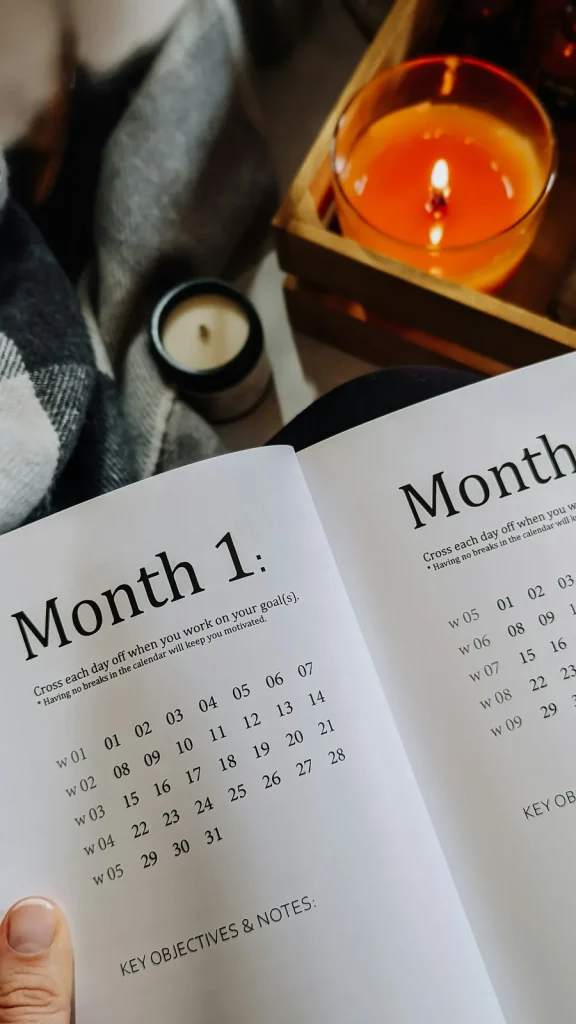
Start a daily journal by writing the date and three short lines: what happened, what stood out, and one thing you want to remember or do next. Use a notebook or an app you already have. A few honest sentences are enough.
You do not need a dramatic day, beautiful handwriting or a complete account of everything that happened. A journal can simply give your thoughts a place to land.
Choose a place you are willing to use
A paper notebook is easy to open and does not require another account. A digital note can be more convenient if you carry your phone everywhere and prefer typing. Choose the option you are likely to return to, not the one that looks most impressive.
Think about privacy before you write sensitive details. Keep a paper journal somewhere appropriate. For a digital journal, check device access, backups, cloud sharing and the app’s privacy settings. Avoid a shared work account for personal entries.
Begin with a small routine
Pick a familiar moment
Try writing after your evening meal, before bed, or while having your morning drink. Attach the habit to something already in your day rather than waiting for an ideal quiet hour.
Write the date
The date gives the entry context and makes it easier to look back. Add a short title if you want, but do not let formatting become a reason to delay writing.
Use three simple prompts
Write one thing that happened, one observation about it, and one thought for tomorrow. These prompts provide enough structure for a blank page without forcing every entry into the same emotional tone.
Stop while the habit still feels easy
Two or three minutes is a reasonable beginning. Write more when you want to, but keep the minimum small. A short entry counts even when you are tired or busy.
Return without catching up
If you miss several days, begin with today. You do not have to recreate every missing entry. A journal should remain usable after an interruption.
An example entry
29 October
Today I cleared the top of my desk and finally found the notes for my project.
I noticed that starting with one corner was easier than trying to organize the whole room.
Tomorrow I want to spend ten minutes sorting the remaining papers.
This example records a specific event and a useful observation. Your entry can be less tidy, more detailed or about something completely ordinary.
Prompts for days when nothing comes to mind
- What took more effort than I expected?
- What small thing made today easier?
- What did I learn or notice?
- Which conversation do I want to remember?
- What is one thing I can leave unfinished for tonight?
- What would make tomorrow a little more manageable?
Choose one prompt rather than answering the whole list. You can also make a list, sketch something or record a sentence you do not want to forget. The format can change with the day.
Keep planning and reflection connected
A journal records what happened and what you noticed. A task list records actions you still need to take. If an entry contains a commitment, move that action into your calendar or weekly plan so it does not get lost among reflections.
For example, “I keep forgetting to answer that email” can become “reply to Maya after lunch” in your task list. You can keep the observation in the journal without depending on the journal to remind you.
Review lightly
After a week or two, reread a few entries if you find that useful. Look for repeated obstacles, enjoyable moments or routines that helped. You do not need scores, charts or a perfect streak.
If a prompt feels uncomfortable or pushes you into repetitive worrying, choose a more concrete topic or stop for the day. Journaling is an optional personal practice, not a test or a substitute for professional support when that is needed.
Common questions
Do I have to write every day?
No. Daily writing is one possible routine. A few entries each week may suit you better, and you can change the frequency.
Should I worry about spelling or grammar?
Only if you want to share the writing. A private journal can use fragments, shorthand or whichever language feels natural.
What if someone else might read it?
Use a more private storage method, limit identifying details, or write only what you would be comfortable keeping in that location.