
How to plan your week
Build a realistic weekly plan in 15 minutes. Sort commitments, choose priorities, make tasks specific and leave room for changes.
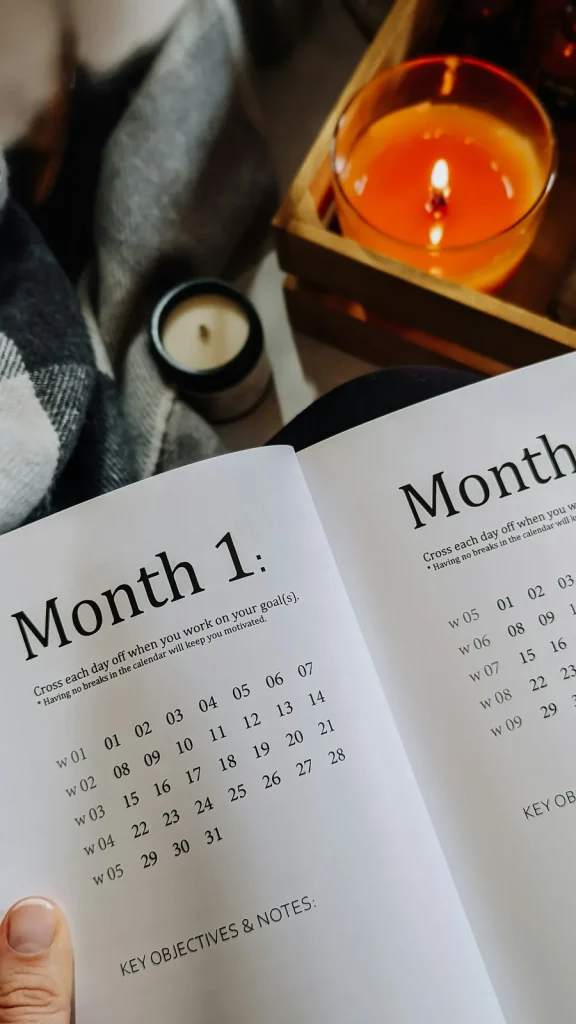
Plan your week by putting fixed commitments on your calendar first, choosing a few important outcomes, and giving the next actions realistic space. Leave some time unassigned so one unexpected task does not overturn the whole plan.
A weekly plan is a decision tool. It should help you answer “What should I do next?” without forcing you to rewrite a detailed timetable every morning.
Set aside 15 minutes
Choose a time that fits your routine: the end of your working week, a quiet evening, or the morning before a new week begins. Use a paper planner, a notebook or a calendar app you already know.
Gather appointments, deadlines, ongoing tasks and anything you promised someone else. Keeping this information in one place helps you notice conflicts before they become urgent.
Make your weekly plan
Empty the loose list from your head
Write down the tasks you are trying to remember. Include personal errands and household jobs if they affect your available time. Do not organize the list yet; first make it visible.
Mark fixed commitments
Add appointments, meetings, classes and genuine deadlines to the calendar. Include travel, preparation and recovery time where relevant. A one-hour appointment may use more than one hour of your day.
Choose a few outcomes that matter
Pick up to three main priorities for the week. These are useful results, such as submitting a proposal or finishing an application. Routine chores can still happen without becoming the week’s main goals.
Turn each priority into a next action
Replace “sort out the website” with “draft the About page” or “choose five article topics.” If a task is too vague to begin, make it smaller until the first step is clear.
Match tasks to available time
Give demanding work a period when interruptions are least likely. Place short errands together where practical. Keep open space between commitments instead of scheduling every minute.
Decide what will wait
Move nonessential ideas to a “Later” list. If your commitments already fill the week, reduce the plan or renegotiate a deadline. A longer list does not create more hours.
A simple example
Imagine you need to finish a work proposal, book a repair and prepare for a weekend trip. The proposal deadline is Thursday, and you have meetings on Tuesday morning.
- Monday: outline the proposal and gather missing figures.
- Tuesday: make the repair booking and draft one proposal section after the meetings.
- Wednesday: finish the draft and leave time for review.
- Thursday: submit the proposal and deal with any final questions.
- Friday: use a short packing checklist and prepare travel essentials.
This example gives each goal a next action. It does not assume that every day will go exactly as planned.
Use a small daily check-in
At the start of the day, look at your commitments and choose one main task. Add one or two smaller tasks if there is room. At the end of the day, decide what to do with unfinished work: continue it, reschedule it, delegate it where appropriate, or remove it.
A task repeatedly carried forward deserves a closer look. It may be too large, unclear, dependent on someone else, or simply no longer important.
Plan for an unpredictable week
If you work shifts, care for someone, or receive urgent assignments, use flexible task lists rather than rigid hourly blocks. Keep a short list of actions that take roughly 10 minutes, another for longer focus sessions, and a clear deadline list.
When a disruption arrives, protect the essential commitment and move optional work. Replanning is part of planning; it is not evidence that you did it wrong.
Finish with a brief review
Ask what took longer than expected, which task had the most value, and what you can simplify next week. A few lines in a daily journal can help you notice recurring obstacles without building a complicated tracking system.
Common questions
Should I plan every hour?
Only if that genuinely helps your circumstances. Most people can start with fixed appointments and a few task blocks, leaving the rest flexible.
What if I have more than three priorities?
Write down everything, then separate essential deadlines from desirable progress. Choosing three main outcomes is a planning aid, not a rule that makes your other responsibilities disappear.