
How to make coffee ice cubes
Freeze plain coffee into ice cubes for iced drinks that keep their coffee flavor. Includes a simple method, serving ideas and storage tips.
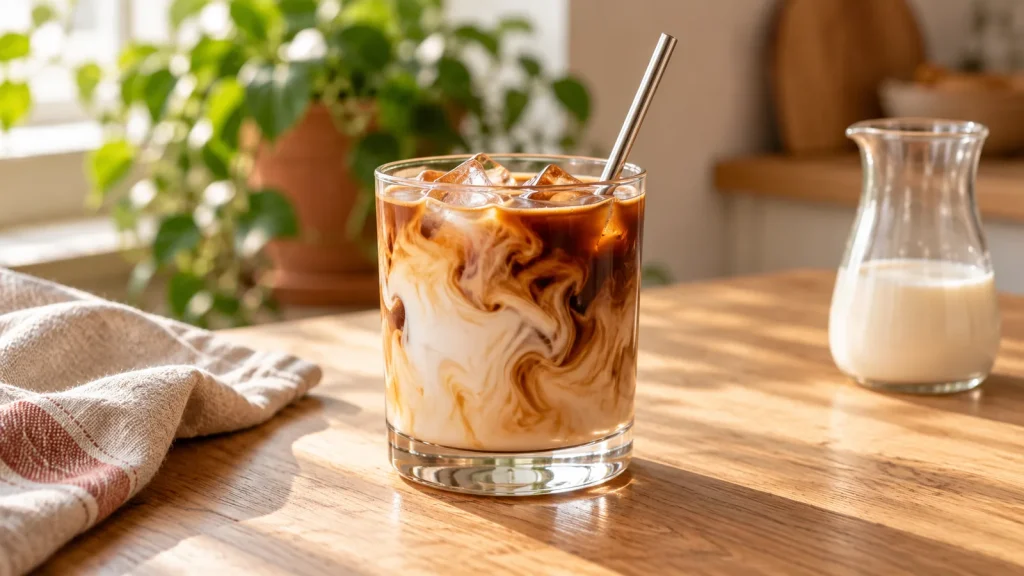
Make coffee ice cubes by pouring cooled coffee into a clean ice-cube tray and freezing it until solid. Add the cubes to cold milk or iced coffee so melting ice adds coffee flavor instead of plain water.
This is useful when you often leave the last part of an iced drink because it has become watery. The cubes work best with coffee you already enjoy drinking.
Ingredients and equipment
- 250 ml of plain brewed coffee, or enough to fill your tray
- A clean, freezer-safe ice-cube tray
- A jug or cup with a pouring lip
- A covered freezer-safe container for the finished cubes
A tray with 25 ml cavities would make approximately ten cubes from 250 ml of coffee. Tray sizes vary, so measure your tray if you need an exact quantity.
Choose your coffee
Use filter coffee, cooled espresso diluted to your preferred strength, or instant coffee made according to its packet directions. Decaf works too. Avoid coffee that already tastes stale or unpleasant; freezing will not improve its flavor.
Plain coffee is the most flexible option. Leaving out milk and sugar lets you adjust each finished drink. If you want sweetness, add a little simple syrup to the glass when serving.
How to freeze the cubes
Prepare and cool the coffee
Brew the coffee and let it cool enough for safe handling and for your tray’s material. A heat-safe jug set in a bowl of cool water can speed this up. Do not pour very hot coffee into a tray that is not designed for it.
Fill the tray carefully
Put the tray on a stable surface. Pour into each compartment, leaving a little headroom for expansion. A small jug is easier to control than a full coffee pot.
Freeze on a level shelf
Transfer the tray to the freezer without tilting it. Use its lid if it has one. Freeze until the cubes are firm all the way through; several hours or overnight is a practical starting point, depending on the freezer and cube size.
Transfer and label
Release the solid cubes and store them in a clean, covered freezer-safe container. Label the coffee type and date. Separate decaf from regular coffee if both are in use.
Three ways to use coffee cubes
In iced coffee: replace some or all of the ordinary ice in cold coffee. The drink will keep its coffee flavor as the cubes melt, though it may become stronger.
With cold milk: start with three or four small cubes and pour over cold milk. Stir occasionally as the cubes melt. The first sip will be milder than the last, so adjust the number of cubes next time.
In a blended drink: use a blender rated for ice. Add enough liquid for the blender to operate as instructed, and stop if the machine struggles. Do not assume every blender can crush hard frozen cubes.
Storage and common problems
Keep the cubes covered to limit freezer odors. Make small batches that you will use regularly rather than storing a large quantity indefinitely. Discard cubes that have been contaminated or whose handling history is uncertain.
If the cubes stick, use the tray’s release method rather than a sharp knife. If the drink becomes too strong, use fewer coffee cubes and more plain ice. If the coffee tastes bitter, start with a milder brew; sweetness cannot always fix an over-extracted flavor.
Once you add milk, treat the finished drink as perishable and keep it chilled. See the storage guidance in the cold coffee recipe.
Common questions
Can I freeze leftover coffee?
Yes, if it is plain coffee that has been handled cleanly and still tastes fresh. Do not use freezing to rescue a drink that has been left in unsuitable conditions.
Will the cubes freeze at exactly the same speed as water?
Not necessarily. Coffee composition, cube size and freezer temperature affect the result. Check for solid cubes rather than relying on an exact timer.